

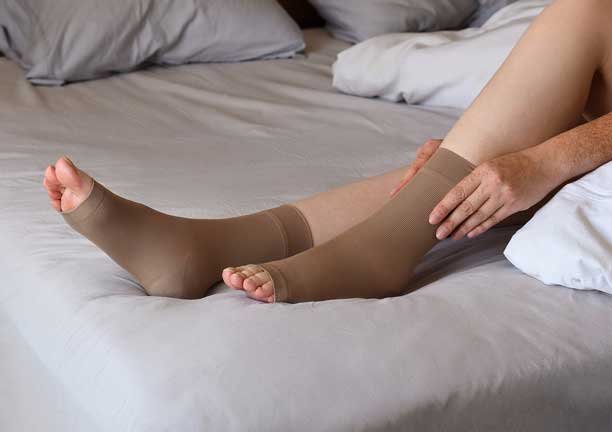
Compression socks apply gentle pressure to your legs and feet, and they come in several styles, with each type serving a distinct purpose. Since your needs depend on your situation, knowing the differences helps you pick well. Here are some different options to choose from, so you are prepared for that decision:
Medical Compression Stockings
Medical stockings may require a prescription from your medical provider. A doctor measures your legs and sets the pressure level, so the fit follows your diagnosis. If you have a circulatory condition, this option typically applies. These socks use stronger pressure than over-the-counter versions.
Your provider guides you on wear time and care instructions for compression socks. Since these garments treat specific issues, you follow the schedule closely. Some people wear them all day, and others use them only at certain times. Ask your provider how often you replace them.
Graduated Compression Stockings
Graduated stockings are tightest at the ankle. The pressure loosens as the fabric moves up your leg, and this design supports blood flow toward your heart. If you sit or stand for long hours, this style suits your routine. Many people wear them during travel or long shifts.
These stockings come in different pressure levels. Talk to a pharmacist if you feel unsure about which number fits. Lighter options work for daily wear, and firmer ones target specific concerns. Since pressure varies, you match the level to your activity.
You choose from several lengths, depending on where you want support. Each length fits a different need, and the right pick depends on your daily habits. Measure your leg before you buy so the fit stays accurate. A proper fit matters more than the style itself. Standard styles include a few clear categories:
- Knee-high stockings for lower-leg support
- Thigh-high stockings for fuller coverage
- Full-length tights for both legs
Velcro Compression Wraps
Velcro wraps fasten around your leg with adjustable straps. You control the tightness yourself, and this feature helps if pulling on socks feels difficult. People with limited hand strength typically prefer this design. The wraps open flat, which makes them easier to apply.
These wraps suit swelling that changes throughout the day. You loosen or tighten the straps as needed, and the adjustment takes only seconds. Since the fit shifts easily, you manage comfort on your own terms. Clean the wraps according to the label instructions.
Velcro options work well for people who struggle with traditional stockings. A few groups often find them practical:
- People recovering from surgery
- Those with reduced grip strength
- Anyone managing daily swelling
Each group benefits from the adjustable design, and setup stays simple. The straps hold firmly once you set them. Check the fit during the day to keep the pressure steady.
Try Compression Socks for Relief
Each type of compression sock fits a different need and lifestyle. Graduated stockings support daily wear, while medical versions address diagnosed conditions. Velcro wraps offer flexibility for those who need adjustable pressure. As the options differ, you match the style to your situation. Visit our clinic or speak with your provider today to review your options and get properly measured.